Pope Leo’s address to the world of culture in Equatorial Guinea
“León XIV” Campus of the National University (Malabo), Equatorial Guinea
Tuesday, 21 April 2026
Distinguished Rector,
Esteemed Authorities,
Dear ladies and gentlemen,
Thank you for inviting me to the inauguration of the new National University of Equatorial Guinea campus.
As I express my gratitude for the kind gesture of naming the campus after me, I recognize that this decision reflects the values we all want to pass on to others and goes beyond the person being honored.
The inauguration of a university campus is more than just an administrative act.
It goes beyond the mere expansion of infrastructure and spaces for study.
This inauguration is an act of trust in humanity, affirming that it is worthwhile to continue investing in the education of future generations and the noble yet demanding task of seeking truth and applying knowledge for the greater good.
Therefore, this moment is important for reasons that go well beyond the physical boundaries of places and buildings. Today, a space for hope, encounter, and progress opens.
Indeed, every authentic academic effort grows not only structurally, but also organically.
For this reason, perhaps, the image of a tree is particularly eloquent when speaking of the university’s mission.
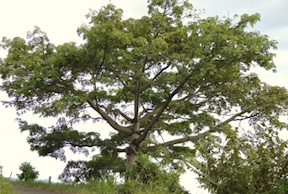
For the people of Equatorial Guinea, the ceiba, their national tree, holds great symbolic significance.
A tree puts down deep roots and slowly ascends to great heights with patience and strength, embodying fruitfulness that exists beyond itself.
With its grandeur, sturdy trunk, and abundant branches, this tree seems to offer a parable of what a university should be: an institution firmly grounded in serious study, the living memory of a people, and the relentless pursuit of truth.
Only in this way can it grow strong and better itself without losing contact with its historical context.
In addition to providing the means for professional success, it will offer future generations a purpose in life, criteria for discernment, and motives for service.
The history of humanity can be understood through the symbolism of certain biblical trees.
In the Garden of Eden, near the Tree of Life, stood the Tree of the Knowledge of Good and Evil (Genesis. 2:9 – out of the ground the Lord God made to grow every tree that is pleasant to the sight and good for food, the tree of life also in the midst of the garden, and the tree of the knowledge of good and evil.).), whose fruit God commanded Adam and Eve not to eat.
This story is not about condemning knowledge, as if faith were afraid of intelligence or suspicious of the desire for knowledge. – (Genesis. 2:19: So out of the ground the Lord God formed every beast of the field and every bird of the air, and brought them to the man to see what he would call them; and whatever the man called every living creature, that was its name.
Instead, human beings have been given the ability to know, name, discern, marvel at, and wonder about the world and its meaning.
Therefore, the problem does not lie with knowledge itself, but with the deviation of intelligence from reality.
This intelligence no longer seeks to correspond with reality; rather, it twists reality for its own purposes, evaluating it according to the benefit of the one who demands to know.
In this way, knowledge ceases to be an opening and becomes a possession.
It stops being a path toward wisdom and becomes a prideful affirmation of self-sufficiency.
This opens the road to confusion and can eventually lead to inhumanity.
Even so, the biblical story does not end with that tree!
Christian tradition contemplates another tree, the Cross.
It is not as a denial of human intelligence, but a sign of its redemption (Colossians 2:2-3 –I want you to know how greatly I strive for you, . . 2 that their hearts may be encouraged as they are knit together in love, to have all the riches of assured understanding and the knowledge of God’s mystery, of Christ, 3 in whom are hid all the treasures of wisdom and knowledge).
While Genesis reveals the temptation to seek knowledge separate from truth and goodness, the cross reveals the truth of Jesus Christ. Far from imposing his will, he offers himself through love and elevates us to the dignity with which we were conceived from the beginning.
At the cross, we are invited to allow our desire for knowledge to be healed and to rediscover that truth is not fabricated, manipulated, or possessed like a trophy. Rather, it is welcomed and sought with humility and served with responsibility.
For this reason, from a Christian perspective, Christ does not appear as a religious escape from intellectual endeavors, as if faith began where reason ended.
On the contrary, he embodies the profound harmony between truth, reason, and freedom. Truth is a reality that precedes human beings, challenges them, and calls them to step outside themselves.
This is why truth can be trusted.
Far from shutting itself off from this search, faith purifies it of self-sufficiency and opens it to a fullness toward which reason strives, even if it cannot completely embrace it.
In this way, the Tree of the Cross restores the original purpose of loving knowledge.
It teaches us that knowing means being open to the truth and understanding its meaning and the mystery it contains.
Thus, the search for truth remains truly human—humble, serious, and open to a truth that precedes, calls, and transcends us.
Indeed, it is not enough for a tree to bear fruit; the quality of the fruit also matters because a tree is known by its fruit (Matthew 7:20-22 – A sound tree cannot bear evil fruit, nor can a bad tree bear good fruit. 19 Every tree that does not bear good fruit is cut down and thrown into the fire. 20 Thus you will know them by their fruits.).
Similarly, a university is defined by the quality of its students and their contribution to the community rather than by the number of graduates or the expansion of its infrastructure.
This is the sincere desire expressed by the Church in her centuries-old commitment to education: that professionals may become good through knowledge and skill, bearing fruit that is authentic and capable of going beyond mere appearances of success.
Dear brothers and sisters,
Here on this campus, the ‘ceiba’ (the national tree of Equatorial Guinea) is called to bear fruits of progress which are rooted in solidarity, and the fruits of knowledge, which ennoble and develop the human being in an integral way.
If this place shapes generations of men and women to live with truth and transform their existence into a gift for others, then the ceiba tree will remain an eloquent symbol, grounded in the best of this land and elevated by wisdom.
It will bear fruit that pays tribute to Equatorial Guinea and enriches the entire human family.
With these sentiments, I invoke an abundance of blessings from Almighty God upon each of you
— the authorities, teachers, students, and staff of this university and your families.
In Jesus Christ, the incarnate Word, God has revealed the truth about humanity and its dignity.
I entrust all of you to the maternal protection of the Most Holy Mother of God, Seat of Wisdom, so that these fruits may be both abundant and very good.
Thank you very much!