Pope Leo’s address when meeting with citizens of Naples
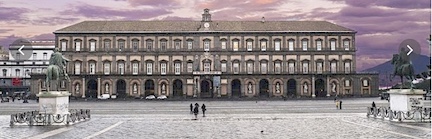
Piazza del Plebiscito (naples) – Friday, 8 May 2026
_____________________________
Brothers and sisters, thank you for your warm welcome!
This embrace of the square is reminiscent of the colonnade of St. Peter’s in Rome.
You certainly know how to welcome people with warmth! Thank you very much!
Against the backdrop of the Gospel scene of the disciples of Emmaus, voices alternated to introduce us to this beautiful gathering.
These are the voices of Naples, the pearl of the Mediterranean, which is watched over by Vesuvius.
These are the voices of a city bathed by the sea and kissed by the sun, a city with an ancient beauty. However, these voices also reflect the wounds, poverty, and fears of this city.
These voices tell of a Naples that often walks tired, disoriented, and disappointed, like the two disciples in the Gospel.
This city needs the closeness that Jesus offered them.
These are the voices of a people who, even today, feel the need to stop and ask themselves, “What really matters?”
Brothers and sisters, this city is filled with a yearning for life, justice, and goodness that cannot be overcome by evil, discouragement, or resignation.
For this reason, we must ask ourselves: What really matters?
What is necessary to resume our journey with commitment instead of disinterest,
with courage instead of fear, and with healing instead of indifference?
Today, Naples experiences a dramatic paradox: considerable tourist growth struggles to correspond with economic dynamism that involves the entire social community.
The city is still marked by a social divide that separates not only the center from the suburbs, but also each area within them. Even the historic center contains existential suburbs.
In many areas we see a geography of real inequality and poverty, fueled by unresolved problems: income inequality, poor job prospects, a lack of adequate structures and services, pervasive crime, unemployment, and school dropout rates.
These issues weigh down the lives of many people.
In the face of these realities, which sometimes reach alarming levels, the State’s presence and action are more necessary than ever to provide citizens with security and confidence and to reduce the influence of organized crime.
In this context, there are many Neapolitans who cultivate the desire for a city redeemed from evil and healed from its wounds.
They are often the real heroes of social work: women and men who dedicate themselves every day, sometimes faithfully carrying out their duties without fanfare, so that justice, truth, and beauty can make their way through streets, institutions, and relationships.
These people must not remain isolated.
For their commitment to permeate the fabric of the city, they need to create connections, work in networks, and build communities.
I am happy to say that the Church in Naples is a “glue” that greatly contributes to networking efforts, holding together the individual contributions and connecting the energies, talents, and aspirations of many.
It has achieved this by promoting an Educational Pact, which received a generous response from institutions such as the municipality, the region, and the government, as well as from many ecclesial and third sector organizations.
I would therefore like to make an appeal to all of you:
– Do not break this network that unites you, do not extinguish this light that you have begun to light up
– Do not extinguish the light you have begun to shine in the darkness.
– Do not lose the color of this dream you are realizing for a better, more beautiful Naples!!
Continue to carry out this pact. Gather your strength. Work together. Walk together—institutions, the Church, and civil society—to uplift the city.
Preserve your children from hardship and evil.
Restore Naples’s calling to be the capital of humanity and hope.
I would also like to highlight this city’s journey to rediscover its millennial vocation of being a natural bridge between the Mediterranean shores.
Naples should not remain just a “postcard” for visitors; it should become an open construction site where concrete peace is built and evident in people’s daily lives.
Peace begins in the heart of each individual, spreads through relationships, takes root in neighborhoods and suburbs, and grows to encompass the entire city and the world.
This is why we believe it is crucial to begin our efforts within the city itself.
Here, peace is built by promoting an alternative culture to violence through daily gestures, educational programs, and just choices.
In fact, we know that there can be no peace without justice, and that authentic justice can never be separated from charity.
With this in mind, initiatives like the House of Peace, which supports children and mothers in need, and Casa Bartimeo, which provides support for young people and adults facing challenges, emerge and flourish.
These are tangible examples of peace manifested as hospitality, care, and the opportunity for redemption.
Furthermore, the ecclesial and civil communities are committed to making Naples a “platform” for intercultural and interreligious dialogue.
Through conferences, international awards, and welcoming initiatives for young people from conflict zones, such as Gaza, you can continue to promote a culture of peace from the ground up, opposing the logic of confrontation and the use of force as a solution to conflicts.
In this sense, Naples continues to reveal its true character by welcoming migrants and refugees. Rather than viewing them as an emergency, Naples sees them as an opportunity for encounter and mutual enrichment.
This is primarily possible thanks to the work of the diocesan Caritas, which has transformed the Port of Naples from a mere landing place into a living symbol of welcome, integration, and hope.
Brothers and sisters, Naples needs this leap forward—this disruptive energy of goodness and evangelical courage that enables us to renew everything.
Let it be everyone’s commitment to take it on and carry it forward together!
Do this especially with young people, who are not only recipients, but also protagonists of change.
It’s not just about involving them; it’s about recognizing their space, trusting them, and giving them responsibility so they can contribute creatively to building something good.
In a world often marked by mistrust and a lack of opportunities, young people are a vital and surprising resource.
The Diocesan Widespread Museum is an example of this, as many young people are involved in preserving and sharing the city’s cultural and spiritual heritage through new, accessible languages.
The young people in the oratories dedicate themselves passionately to educating the little ones, becoming credible points of reference and witnesses of healthy relationships.
This is also demonstrated by the numerous volunteers who dedicate themselves to charitable services, social initiatives, and supporting those in need.
These experiences are not marginal; they are concrete signs of a young church and a regenerated city.
I am confident that you will continue to cultivate them with the boldness, passion, and enthusiasm that distinguish you.
Dear friends,
I thank you for your warm welcome, and I entrust all of you to the intercession of Mary Most Holy and St. Januarius.
May the Lord always keep you faithful to the Gospel and bless the city of Naples!