Pope Leo’s address to the national meeting of Catholic Religion Teachers,
Audience Hall – Saturday, 25 April 2026
For your third national meeting, you chose the expression “The heart speaks to the heart”
________________________
In the name of the Father, and of the Son, and of the Holy Spirit.
Peace be with you!
Dear brothers and sisters,
I warmly greet you and I thank you for your presence and for your valuable service that you carry out in schools.
Your work is demanding and often goes unnoticed, but it is important for the growth of many children and young people.
Indeed, as Pope Francis said, “The religious dimension is a constitutive element of the human experience and cannot be marginalized in the educational process of the younger generations”.
St. Augustine wrote: “Man, being a part of your creation, desires to praise you [O Lord]. You inspire our delight in praising You, for You have made us for Yourself, and our hearts are restless until they rest in You. Let me seek You, Lord, by calling on You; let me call on You by believing in You” (St. Augustine’s Confessions, 1.1).
He spoke of an inner search to which, in the human being, the great questions of life have always been linked in the human being: the relationship with God, with creation and with others.
Thus, the thirst for the infinite, inherent in every person, can become an energy that promotes peace, renews society. and bridges its contradictions.
In this context, your service is an expression of the Church’s care for the next generations.
It is like a springboard from which children and young people can launch themselves into the fascinating adventure of inner dialogue.
In this way, your service is an indispensable element of the educational partnership so sorely needed today.
Furthermore, Catholic religious education is of great cultural significance.
It is useful for understanding historical and social dynamics, as well as the thoughts, ingenuity, and artistic expressions that have shaped and continue to shape Italy, Europe, and many other countries around the world.
All of this is incorporated into your lessons in the light of the Church’s ever-relevant teachings.
You engage in dialogue with other fields of knowledge and religious research, and, above all, you study the Bible’s inexhaustible pages.
Through this study, we come to know Christ, the Son of God made man, the revelation of the Father’s face, and the perfect model of humanity.
In this way, you make what might otherwise remain incomprehensible and vague accessible to younger generations with full respect for everyone’s freedom, showing how true secularism does not exclude the religious dimension but rather treasures it as an educational resource.
This mindset is essential for any dialogue, both in schools and in society. It involves knowing and loving who we are so that we may encounter others with respect and openness.
In light of this, I would like to share some reflections with you that are very important to me.
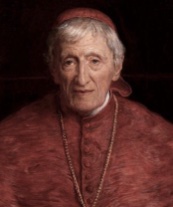
For your third national meeting, you chose the title “The heart speaks to the heart” (Cor ad cor loquitur), inspired by the motto of St. John Henry Newman, a Doctor of the Church and co-patron saint of education.
These words propose a journey in which truth is the goal and personal relationships are the path to achieving it.
Through teaching, they commit you to helping young people recognize a voice already within them.
This voice must not be stifled or confused with the surrounding noise.
In our age, we are constantly besieged by stimuli of every kind and silencing that voice is all too easy. Therefore, teaching them to hear or rediscover that voice is one of the greatest gifts we can give the younger generations.
People cannot live without truth and authentic meaning.
Although young people may seem apathetic or insensitive, they often conceal restlessness and suffering behind a facade of apparent indifference because they “feel too much” and too intensely without being able to name what they are experiencing.
Therefore, Teaching means guiding people to listen to their hearts and achieve inner freedom and the capacity for critical thinking.
This is done through a process in which faith and reason coexist and support one another in the humble and sincere search for truth.
For this reason, education requires patience to sow without expecting immediate results and to respect the pace at which a person grows.
As Newman teaches, above all, it requires love!
Dear friends,
The truth is conveyed through people,
For your students, you yourselves are those people.
You are called to be credible teachers because you love God and your students.
You are called to pass on values without exaggerated self-importance or moralizing.
You are called to offer a perspective that uplifts.
Youa are called to bear witness to that humble and approachable consistency that makes even the most challenging subjects attractive and appealing.
Your students don’t need ready-made answers; they need closeness and honesty from adults who support them as they grapple with life’s big questions.
They will remember those who recognized their unique gifts, took them seriously, and were not afraid to walk with them, showing themselves to be people who seek, think, live, and believe.
Of course, all this does not detract from the need for solid expertise driven by a passion for study, cultural rigor, and pedagogical preparation because teaching the Catholic faith also requires continuous professional development, planning, and the use of appropriate language.
Schools today – in Italy and elsewhere – face dramatic yet exhilarating challenges.
For this reason, the Church, which walks with you, sends you forth as “servants of the world of education, choreographers of hope, tireless seekers of wisdom, credible creators of expressions of beauty” (see Pope Leo’s apostolic letter on education: Drawing new maps of hope, 11.3).
I thank you for your commitment and encourage you to persevere, entrusting you to the intercession of the Virgin Mary and the holy educators.
I will keep you in my prayers and cordially impart my apostolic blessing to you, your families, your students, and all your loved ones. Thank you!