Pope Francis approved 1st Dicastery Document on IT
On January 14, 2025, Pope Francis approved the publication of Antiqua et Nova (Old and New) for the Curia’s Dicastery for the Doctrine of the Faith and the Dicastery for Culture and Education.
It is an introductory report on the relationship between artificial intelligence and human intelligence, and it clarifies what artificial intelligence involves.
The first 12 paragraphs of Antiqua et Nova explain the origins of the concept of artificial intelligence.
ANTIQUA ET NOVA
I. Introduction
1. Drawing from ancient and modern wisdom, we are called to reflect on the challenges and opportunities posed by scientific and technological advancements, especially the recent development of artificial intelligence (AI).
According to the Christian tradition, the gift of intelligence is an essential aspect of being created “in the image of God” (Genesis 1:27).
Based on an integral vision of the human person and the biblical mandate to “till” and “keep” the earth (Genesis 2:15), the Church emphasizes that this gift of intelligence should be exercised through responsible reasoning and technical abilities in stewarding the created world.
2. The Church encourages the advancement of science, technology, the arts, and other human endeavors.
It views these endeavors as part of humanity’s collaboration with God in perfecting the visible creation.
As Sirach affirms, “God gave skill to human beings, that he might be glorified in his marvelous works” (Sir. 38:6).
Human abilities and creativity come from God, and when used properly, they glorify God by reflecting his wisdom and goodness.
Therefore, when we ask what it means to “be human,” we must consider our scientific and technological abilities.
3. From this perspective, Antiqua et Nova ‘note’ addresses the anthropological and ethical challenges raised by AI.
These issues are particularly significant because one of this technology’s goals is to imitate the human intelligence that designed it.
Unlike many other human creations, AI can be trained on the results of human creativity and then generate new “artifacts” with a level of speed and skill that often rivals or surpasses human capabilities, such as producing text or images that are indistinguishable from human compositions.
This raises critical concerns about AI’s potential role in the growing crisis of truth in the public forum.
Furthermore, AI is designed to learn and autonomously make choices, adapt to new situations, and provide solutions that its programmers did not foresee. Thus, AI raises fundamental questions about ethical responsibility and human safety with broader implications for society as a whole.
This new situation has prompted many to reflect on what it means to be human and humanity’s role in the world.
4. Taking all this into account, there is a broad consensus that AI represents a significant and new phase in humanity’s relationship with technology.
Pope Francis has described this as an “epochal change.”
AI’s impact is global and spans a wide range of areas, including interpersonal relationships, education, work, art, healthcare, law, warfare, and international relations.
As AI rapidly advances toward even greater achievements, it is critically important to consider its anthropological and ethical implications.
This involves mitigating risks, preventing harm, and ensuring its applications promote human progress and the common good.
5. In response to Pope Francis’s call for a renewed “wisdom of heart” and to contribute positively to the discernment regarding AI, the Church offers its experience through the anthropological and ethical reflections contained in this ‘note’.
The Church is committed to its active role in the global dialogue on these issues and invites those entrusted with transmitting the faith, including parents, teachers, pastors, and bishops, to dedicate themselves to this critical subject with care and attention.
Although this document is primarily intended for this audience, it is also meant to be accessible to a broader audience, particularly those who share the conviction that scientific and technological advances should serve the human person and the common good.
6. To this end, the document begins by distinguishing the concepts of intelligence in AI and human intelligence.
Then, it explores the Christian understanding of human intelligence, providing a framework rooted in the Church’s philosophical and theological tradition.
Lastly, the document offers guidelines to ensure the development and use of AI upholds human dignity and promotes the integral development of individuals and society.
II. What is Artificial Intelligence?
7. The concept of “intelligence” in AI has evolved over time, drawing on ideas from various disciplines.
While the concept has its origins centuries ago, a significant milestone occurred in 1956 when American computer scientist John McCarthy organized a summer workshop at Dartmouth University to explore the field of artificial intelligence. McCarthy defined artificial intelligence as “the science and engineering of making intelligent machines.”
The workshop launched a research program focused on designing machines capable of performing tasks typically associated with human intellect and intelligent behavior.
8. Since then, AI research has advanced rapidly, resulting in the creation of complex systems that can perform highly sophisticated tasks.
These “narrow AI” systems are designed to perform specific, limited functions such as language translation, storm trajectory prediction, image classification, question answering, and visual content generation.
While the definition of “intelligence” varies in AI research, most contemporary AI systems—particularly those using machine learning—rely on statistical inference rather than logical deduction.
By analyzing large data sets to identify patterns, AI can “predict” outcomes and propose new approaches, mimicking some cognitive processes typical of human problem solving.
These achievements have been made possible by advances in computing technology, including neural networks, unsupervised machine learning, and evolutionary algorithms, as well as hardware innovations, such as specialized processors.
These technologies enable AI systems to respond to various forms of human input, adapt to new situations, and suggest solutions that their original programmers did not anticipate.
9. Due to rapid advancements in technology, many tasks that were once managed exclusively by humans are now entrusted to AI.
These systems can augment or even surpass human capabilities in many fields, particularly in specialized areas such as data analysis, image recognition, and medical diagnosis.
Each “narrow AI” application is designed for a specific task, but many researchers aspire to develop “Artificial General Intelligence” (AGI)—a single system capable of operating across all cognitive domains and performing any task within the scope of human intelligence.
Some argue that AGI could one day achieve “superintelligence,” surpassing human intellectual capacities.
Others believe that AGI could contribute to “super-longevity” through advances in biotechnology.
However, others fear that these possibilities, even if hypothetical, could one day overshadow the human experience.
Still others welcome this potential transformation.
10. Many perspectives on the subject implicitly assume that the term “intelligence” can refer to both human and AI intelligence.
However, this does not capture the full scope of the concept.
For humans, intelligence pertains to the person as a whole.
In the context of AI, however, “intelligence” is often understood functionally. This understanding presumes that activities characteristic of the human mind can be broken down into digitized steps that machines can replicate.
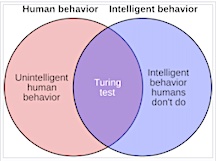
11. This functional perspective is exemplified by the “Turing test,” which deems a machine “intelligent” if its behavior is indistinguishable from that of a human.
However, in this context, the term “behavior” refers only to the performance of specific intellectual tasks.
It does not encompass the full range of human experience, including abstraction, emotion, creativity, and aesthetic, moral, and religious sensibilities.
It also does not encompass the full range of expressions characteristic of the human mind. In the case of AI, a system’s “intelligence” is evaluated based on its ability to produce appropriate responses associated with the human intellect, regardless of how those responses are generated.
12. Although AI has advanced features that give it the ability to perform sophisticated tasks, it does not have the ability to think.
This distinction is important because the definition of “intelligence” shapes our understanding of the relationship between human thought and technology.
Recalling the richness of the philosophical tradition and Christian theology is key to appreciating this distinction.
These traditions offer a deeper and more comprehensive understanding of intelligence, which is central to the Church’s teaching on the nature, dignity, and vocation of the human person.